
Welcome to
The Journal
Welcome to the Chasing Stone blog! We’re so glad you’re here. Our story began in 2018 with a simple need for a portable, textured, stone-like styling surface. This idea quickly grew into the vibrant and diverse collection of backdrops and styling surfaces you see today. Each piece is inspired by my deep love and fascination for the natural world.
This blog is a place where we hope to answer your frequently asked questions, share tips and tricks, and connect with our amazing community. Whether you're a photographer, florist, or creative enthusiast, we’re here to support you and inspire your artistic journey. Alongside my passion for travel and design, I am excited to share insights and stories that can spark your creativity. Thank you for joining us and being a part of the Chasing Stone family!
Explore
OUR
JOURNAL
CATEGORIES
TUTORIALS
BTS
TRAVEL
SPOTLIGHTS
FAQ
COLOR THEORY
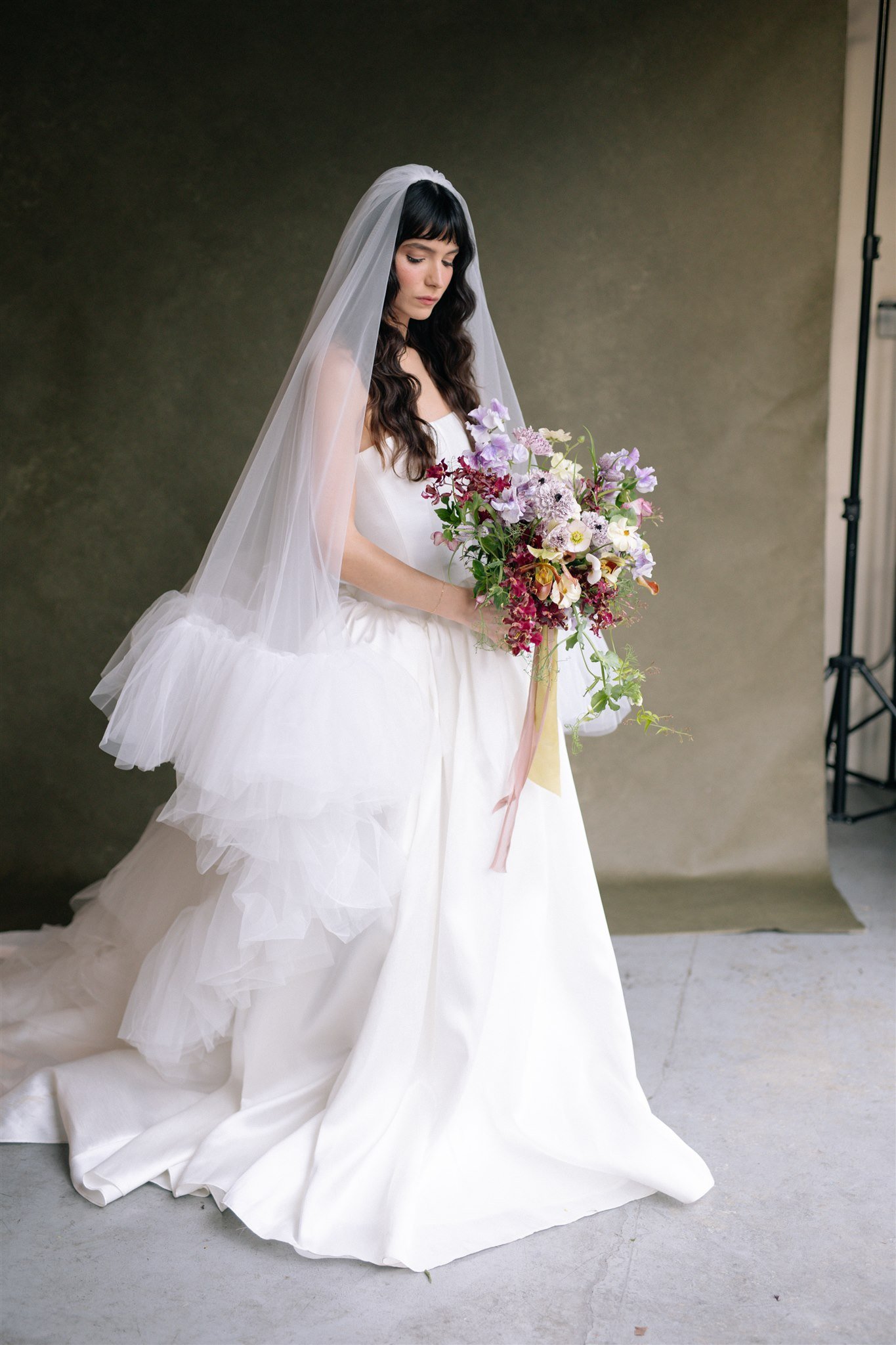
How to Recreate Golden Hour Lighting Indoors with Photography Backdrops (2026)
Golden hour light is not something you wait for. It is something you build. In this guide, we break down the exact equipment, light placement, and backdrop choices that allow photographers to recreate the warmth, directionality, and dimensional quality of golden hour light inside a studio at any time of day, any day of the week. From CTO gel selection and color temperature fundamentals to why hand-painted canvas responds to warm light in a way that vinyl and muslin simply cannot replicate, everything you need to bring golden hour indoors is here.
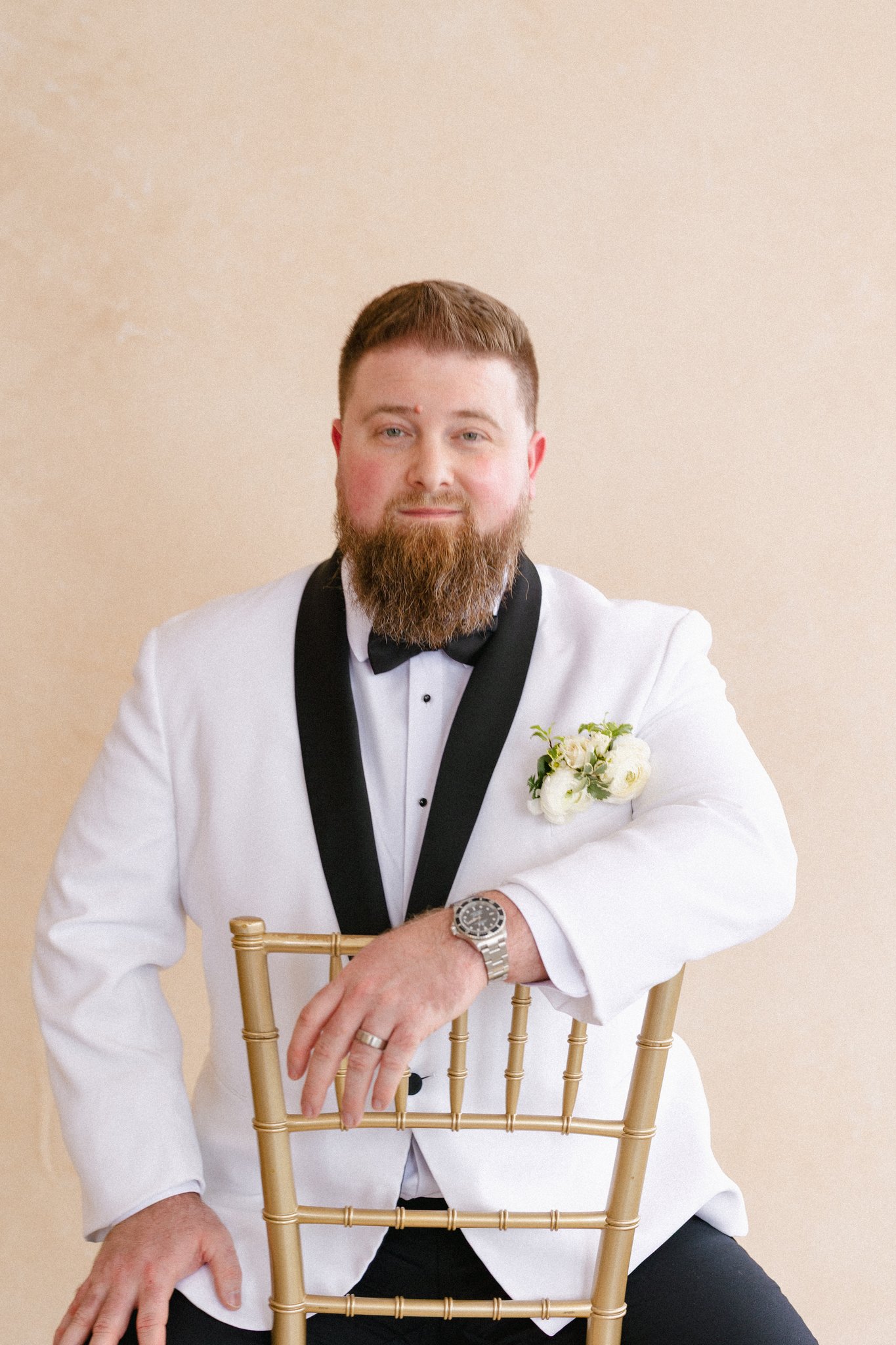
Cinematic Portrait Photography Techniques: Creating Depth with Backdrops (2026)
The backdrop behind a cinematic portrait is not a background. It is a creative partner. Hand-painted canvas absorbs and diffuses studio light the way no vinyl or printed surface can, creating a dimensional field of color that responds to every shift in your key light, holds tonal depth at every aperture, and transforms shallow depth of field into what photographers describe as painterly bokeh. In this guide, we break down the optics of cinematic portraiture, from focal length and aperture to subject-to-backdrop distance and lighting patterns, so you can build frames that feel less like photographs and more like paintings.
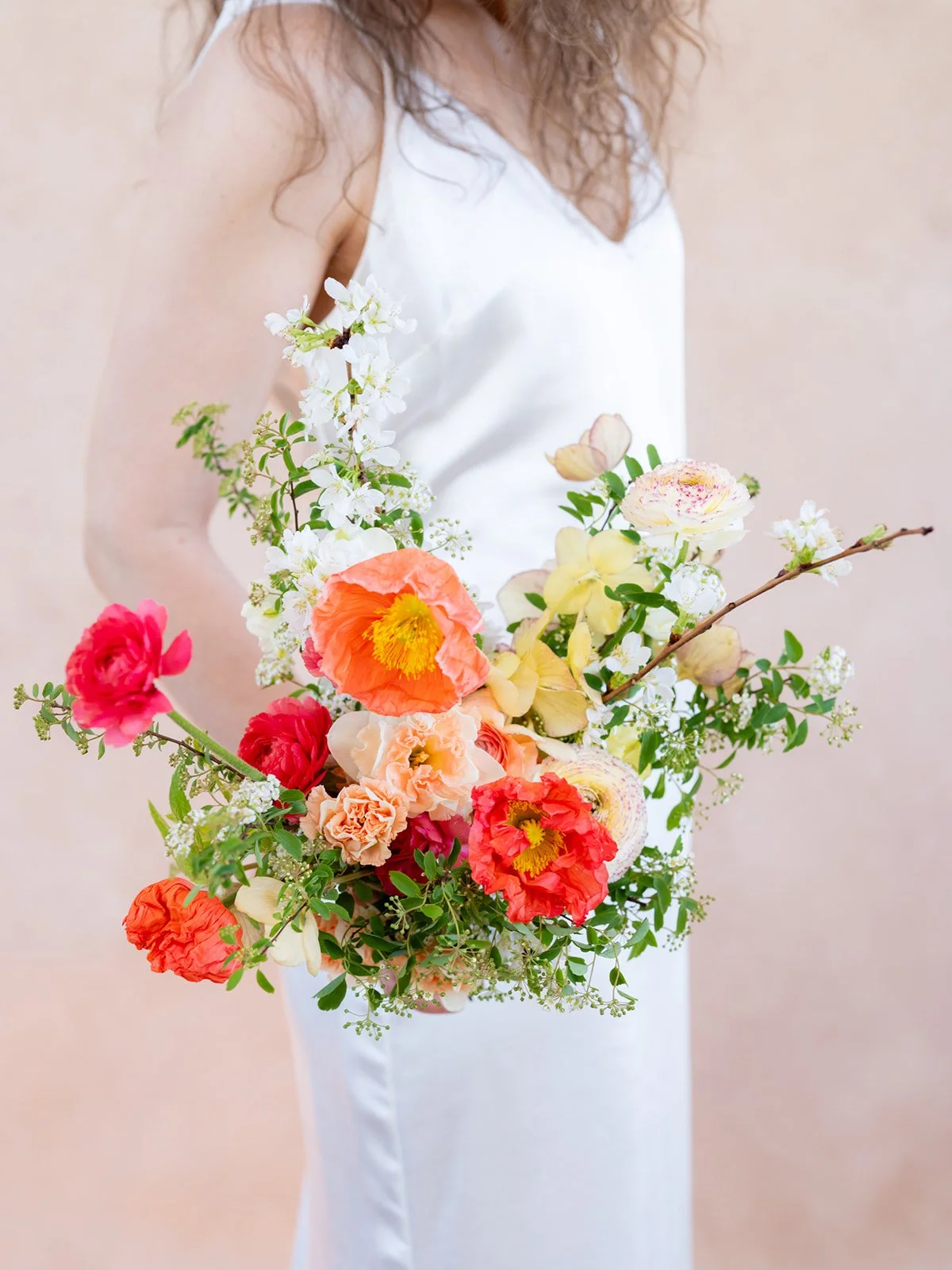
Pantone Color Trends 2026: How to Choose Photography Backdrops by Season
Pantone named Cloud Dancer the 2026 Color of the Year, the first true white ever selected. From Burnished Lilac to Muted Clay to Foxglove, every major Pantone 2026 trend color finds its counterpart in a Chasing Stone hand-painted canvas built to outlast the trend cycle.
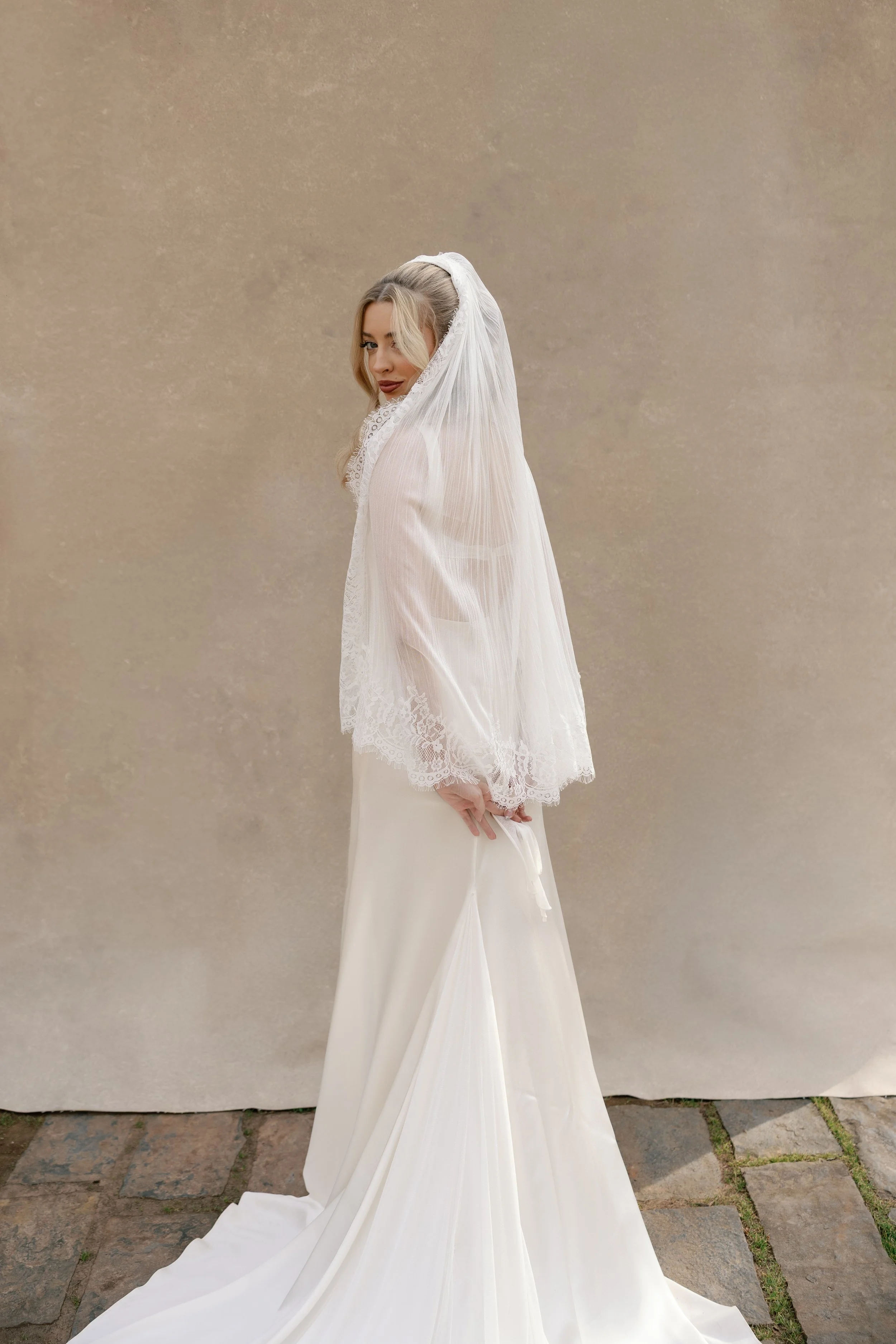
Negative Space in Portrait Photography: Using Backdrops for Minimalist Composition (2026)
The most powerful element in a portrait is often the one the photographer chose not to fill. A subject suspended in breathing room. A surface that holds dimension even when defocused. This is the technical and creative framework for minimalist portrait composition on hand-painted canvas, where negative space stops being empty background and becomes a living compositional element with tonal depth, optical presence, and narrative weight.
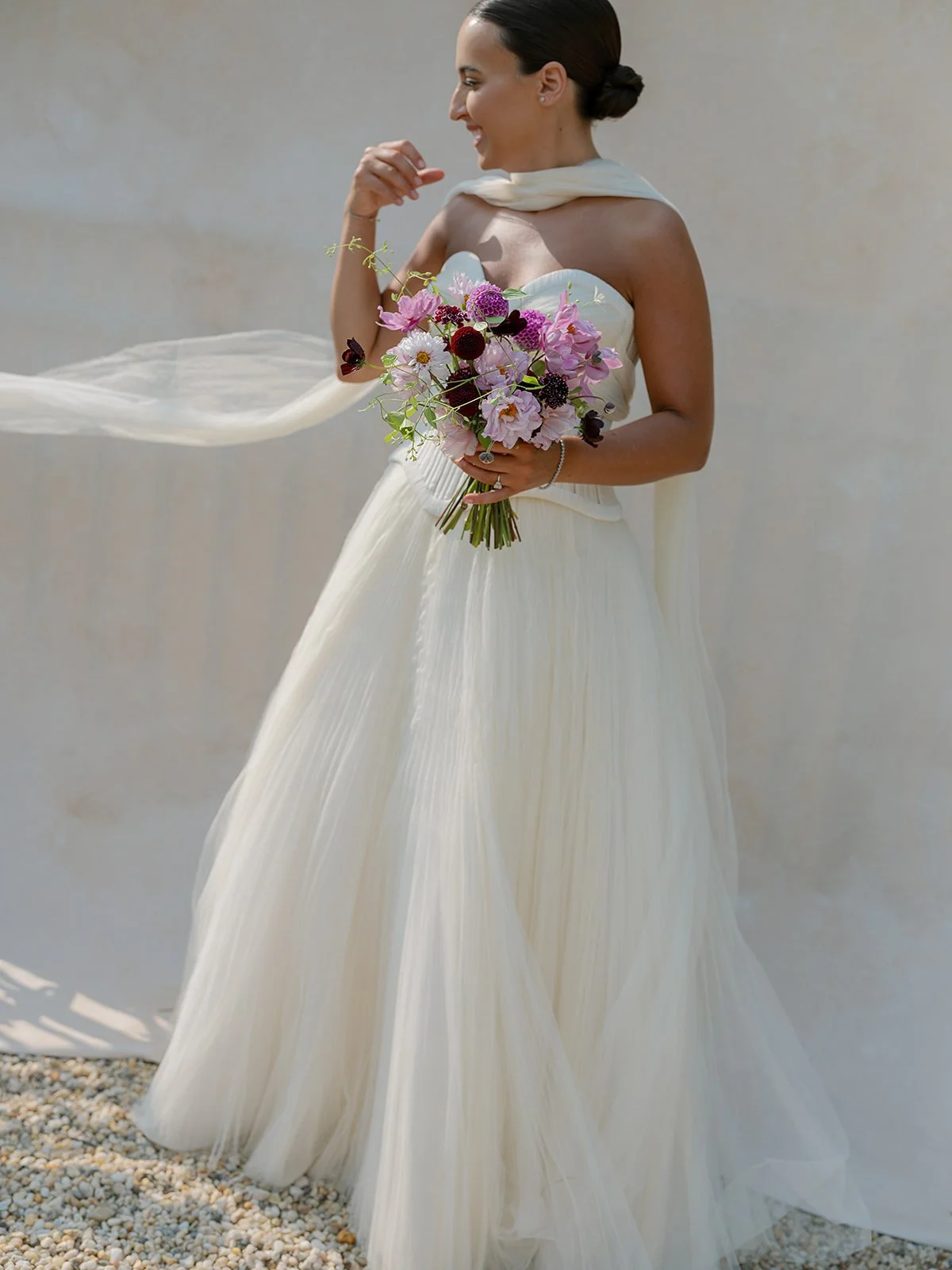
Photographing Flowing Fabric on Canvas Backdrops: Movement and Veil Techniques (2026)
Photographing flowing fabric on canvas backdrops requires a different technical approach than any other studio discipline. Shutter speed, wind direction, fabric weight, and surface texture must converge in a single exposure and the backdrop is no longer behind the subject but visible through it. This guide covers the camera settings, wind techniques, and color theory that separate a competent fabric photograph from an editorial one, plus why hand-painted canvas outperforms vinyl and muslin every time.

How to Layer Photography Backdrops for Editorial Fashion Photography (2026)
There is a moment when a second canvas becomes visible behind the first: a rim of color, a whisper of a different tonal world. That partial revelation is what separates a studio with a single backdrop from a set with narrative depth. The craft of layering hand-painted canvas, defined.
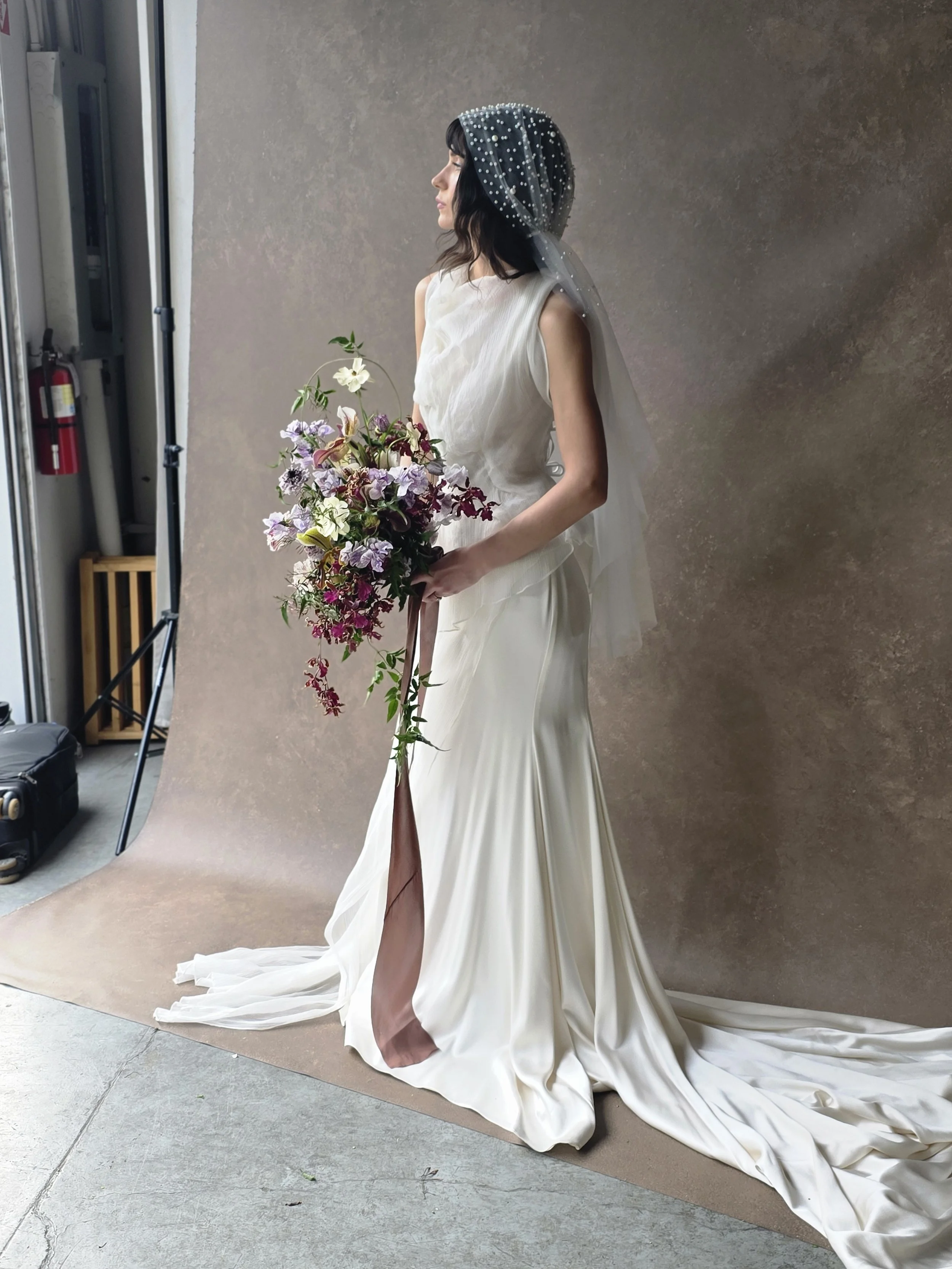
How Backdrop Choice Affects Your Photography Pricing: Client Perception and the Visual Language of Premium Service in 2026
Your backdrop is doing more than filling the frame. It is shaping how clients perceive the value of your work before they ever inquire. This article explores how hand-painted canvas backdrops influence pricing power, elevate portfolio quality, and help photographers attract higher-end clients through the visual language of luxury, artistry, and intentional design.
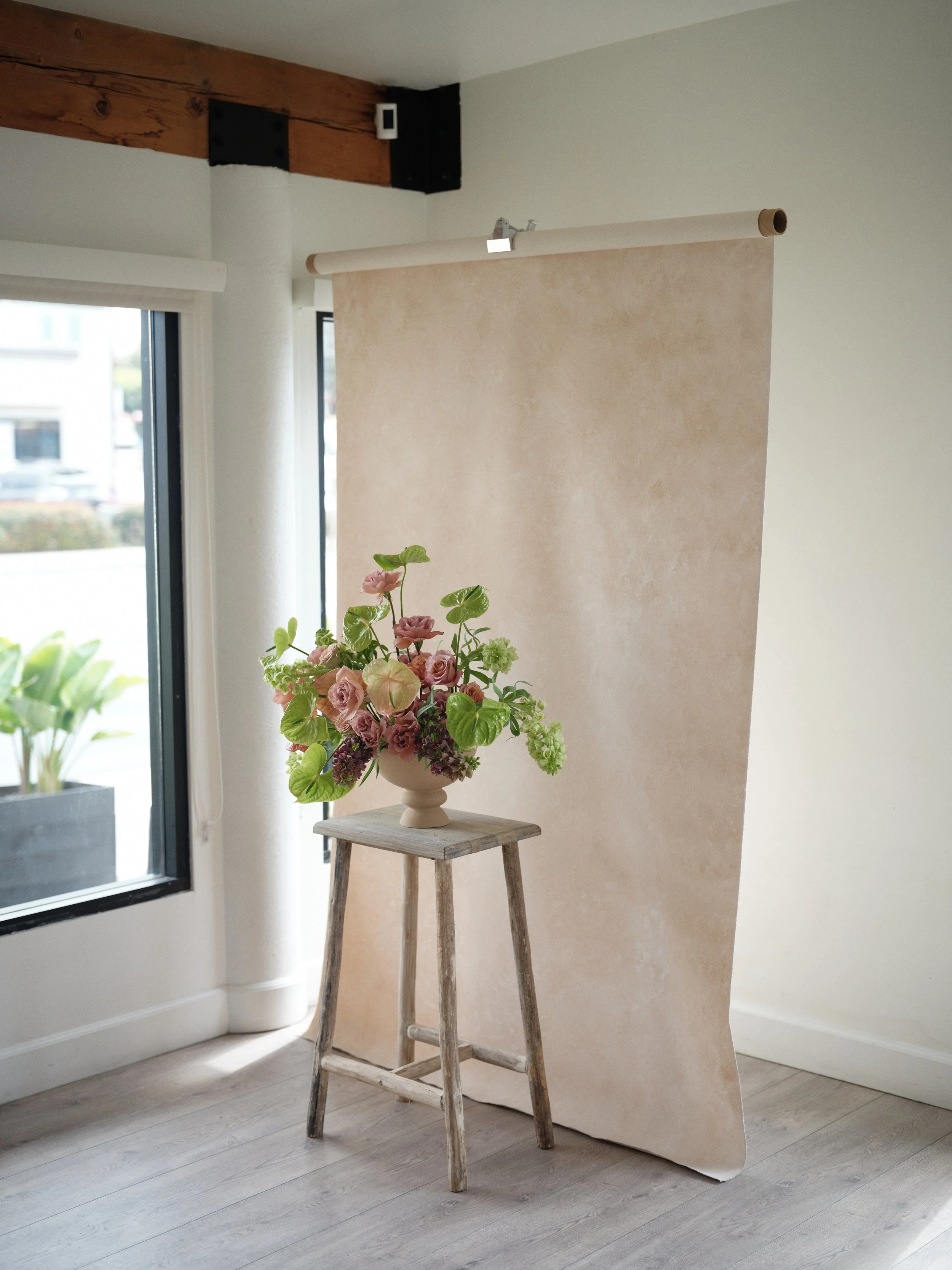
Building a Wedding Photography Portfolio with Backdrops: Editorial Feature Tips for 2026
A wedding photography portfolio is more than a collection of beautiful images. It's an argument for a specific way of seeing, a visual language so deliberate that prospective clients recognize it before reading a word. The surface behind the subject is where that argument is won or lost. This guide explores how hand-painted canvas backdrops transform competent documentation into editorial work worthy of publication.
How Much Do Hand-Painted Backdrops Cost? Investment Guide for Wedding Photographers (2026)
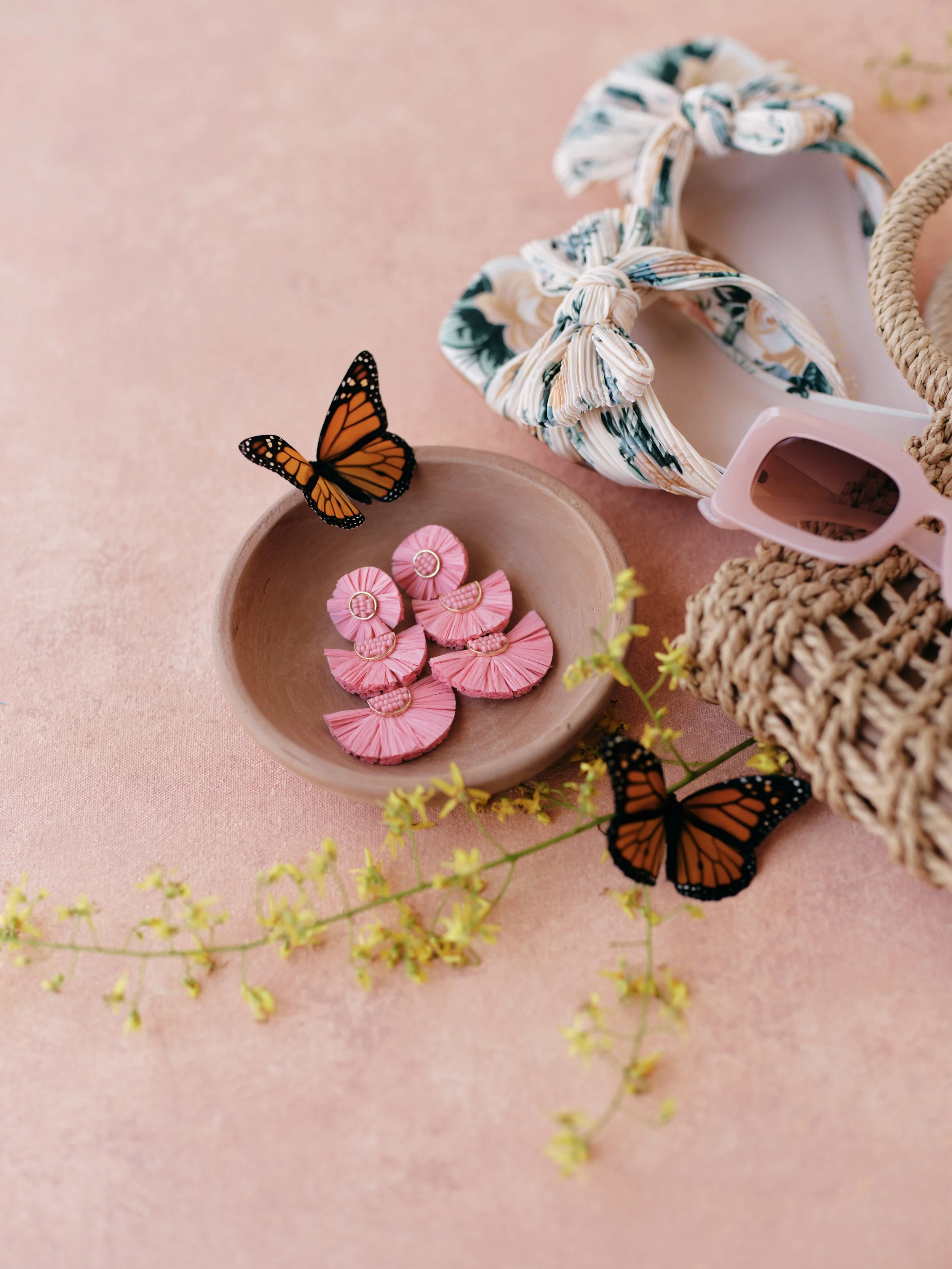
Hand-painted canvas backdrops are one of the most significant investments wedding and editorial photographers make in their visual style, but the difference between canvas and mass-produced vinyl goes far beyond price alone. In this guide, we break down how much hand-painted backdrops cost in 2026, why premium cotton canvas behaves differently under light, and how photographers evaluate the return on investment through durability, branding, and cost per session. Whether you are comparing canvas to muslin or vinyl, building your first studio collection, or deciding which backdrop sizes offer the most versatility, this article explains what makes hand-painted canvas a luxury photography tool rather than just another background.
Are Premium Photography Backdrops Worth It? ROI Calculator for Photographers (2026)
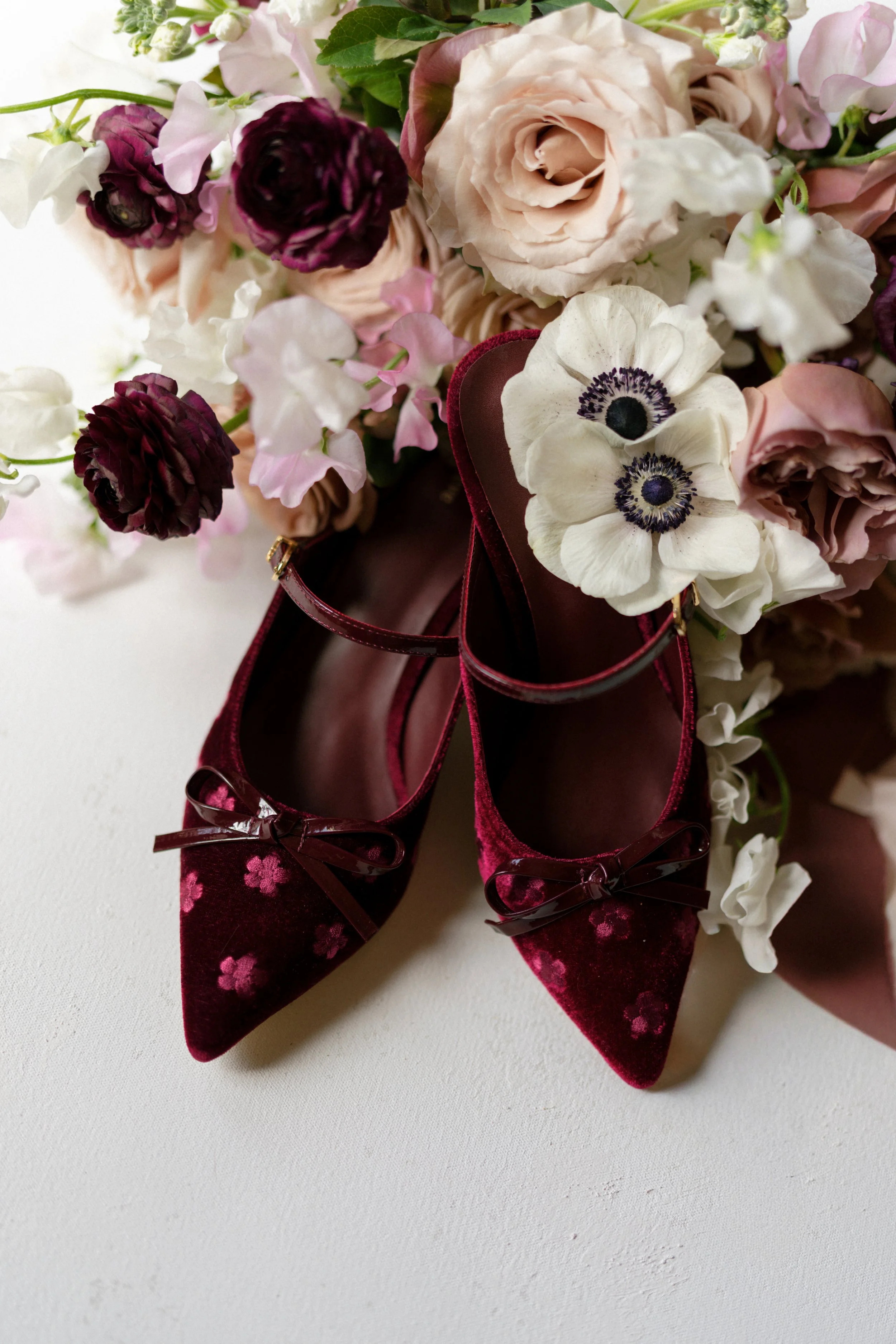
A premium hand-painted canvas photography backdrop pays for itself in fewer than twenty bookings, drops below five dollars per session within the first year, and remains studio-ready for a decade or longer. A thirty-dollar muslin roll, by contrast, demands replacement every twelve to eighteen months. The arithmetic favors canvas. The physics favor canvas. And for photographers booking twenty or more sessions per year, the ROI case is no longer a question of preference. It's a question of when you make the upgrade.
Photography Backdrop Exposure Guide: How to Meter Hand-Painted Textures (2026)
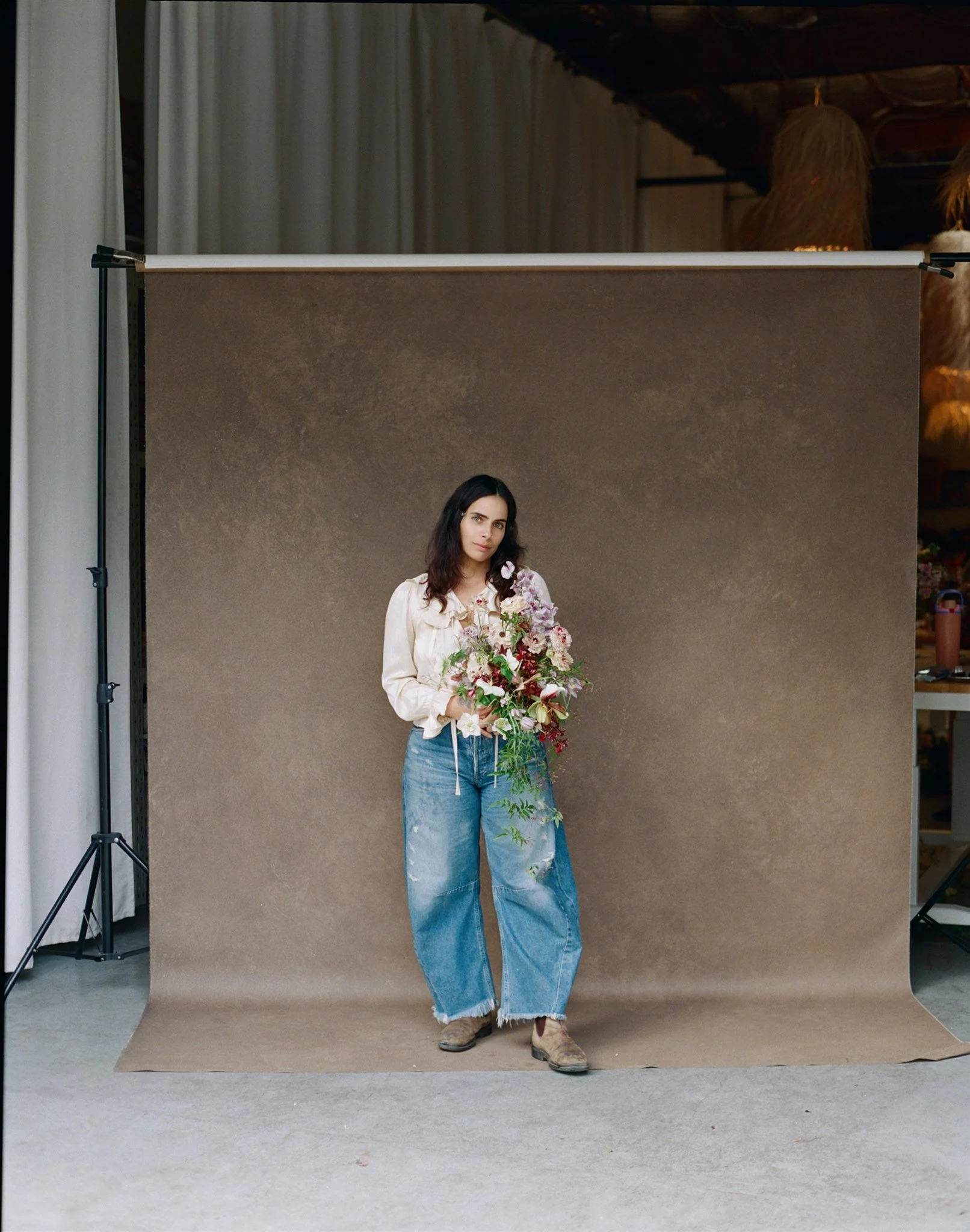
Hand-painted canvas backdrops photograph differently than vinyl or paper because textured cotton surfaces absorb and diffuse light instead of reflecting it evenly back to your camera. In this guide, we break down why standard in-camera metering often misreads hand-painted backdrops, how exposure compensation changes based on backdrop color, and the best techniques for preserving texture, tonal depth, and dimension in your photography. Whether you shoot portraits, weddings, editorials, or studio work, understanding how to properly meter textured canvas backdrops will help you create softer, more luminous images with accurate color and beautifully balanced light.
Professional Color Grading for Backdrop Photography in Lightroom (2026)
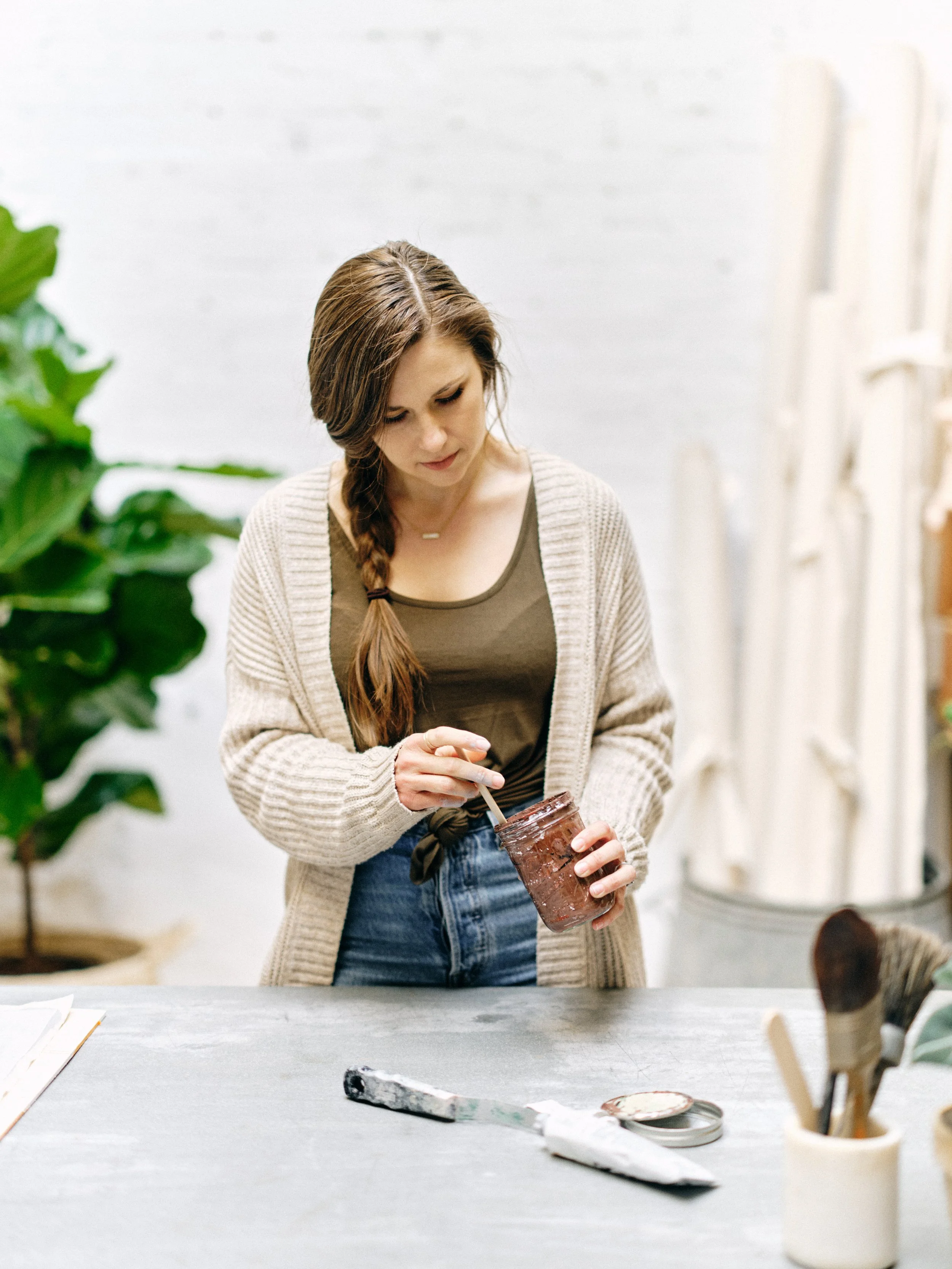
Hand-painted canvas backdrops respond to Lightroom adjustments differently than vinyl or muslin, and understanding that difference is what separates good grading from masterful grading. Canvas absorbs light and re-emits it through layered pigment, creating the optical depth that emerges the moment you lift shadows in the Develop module. This guide walks through white balance, tone curve, HSL, and texture work specifically for hand-painted canvas, with grading settings for warm, cool, and neutral colorways. Restraint is the professional move. Canvas deserves editing that honors its craft.
Photography Backdrop Materials Comparison: Canvas vs. Muslin vs. Vinyl (2026)
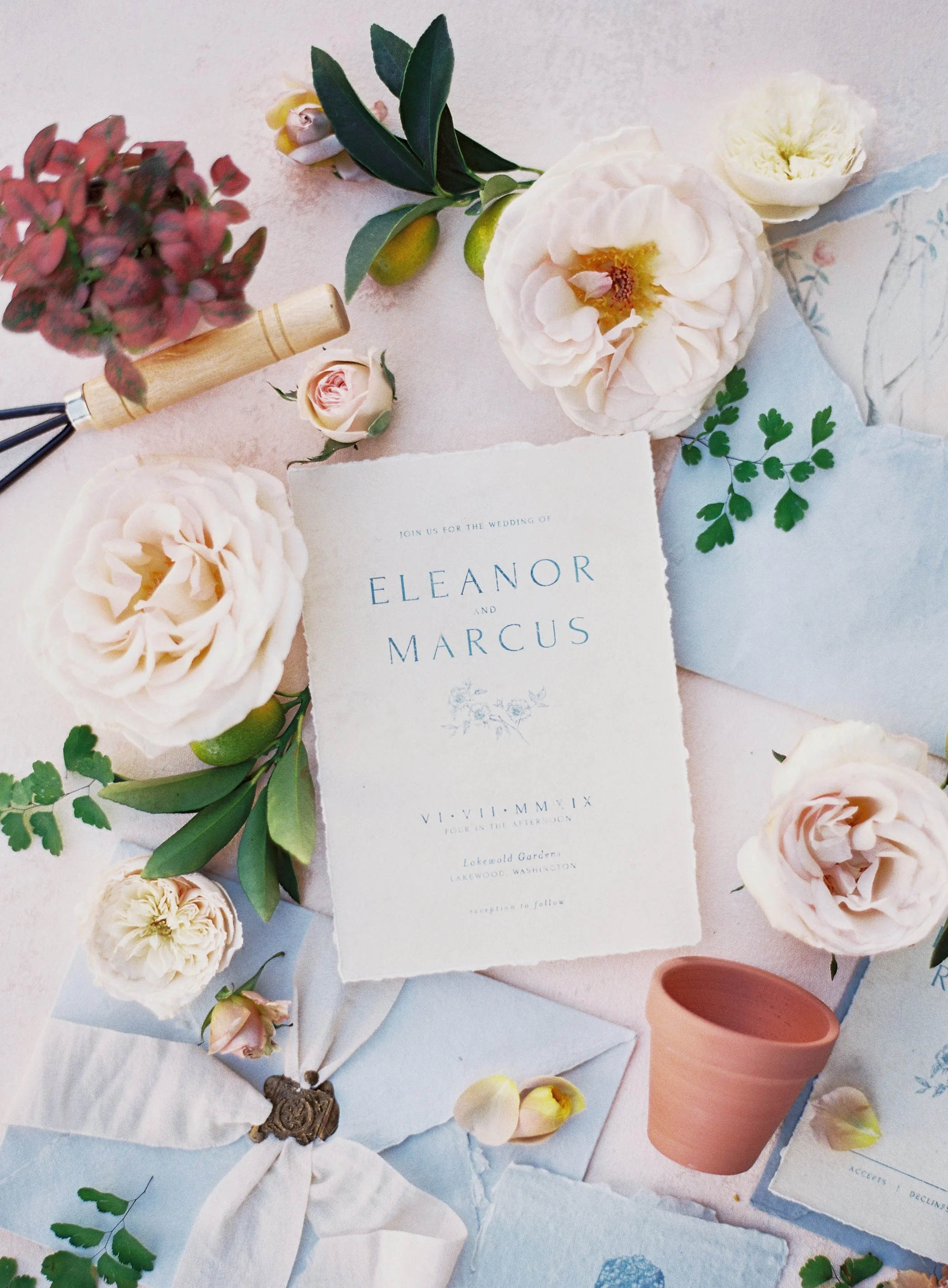
Hand-painted canvas backdrops have become the professional standard for a reason. Unlike muslin or vinyl, canvas interacts with light in a way that creates real depth, not just the illusion of it. The textured surface absorbs and diffuses light, allowing subtle variations in tone and shadow to emerge naturally in camera. This is the difference between a background that simply sits behind your subject and one that actively enhances the image. For photographers focused on building a refined portfolio, understanding how backdrop materials influence light, texture, and overall image quality is one of the most important decisions in the studio.
How to Light Hand-Painted Canvas Backdrops: Natural Light Techniques That Actually Work
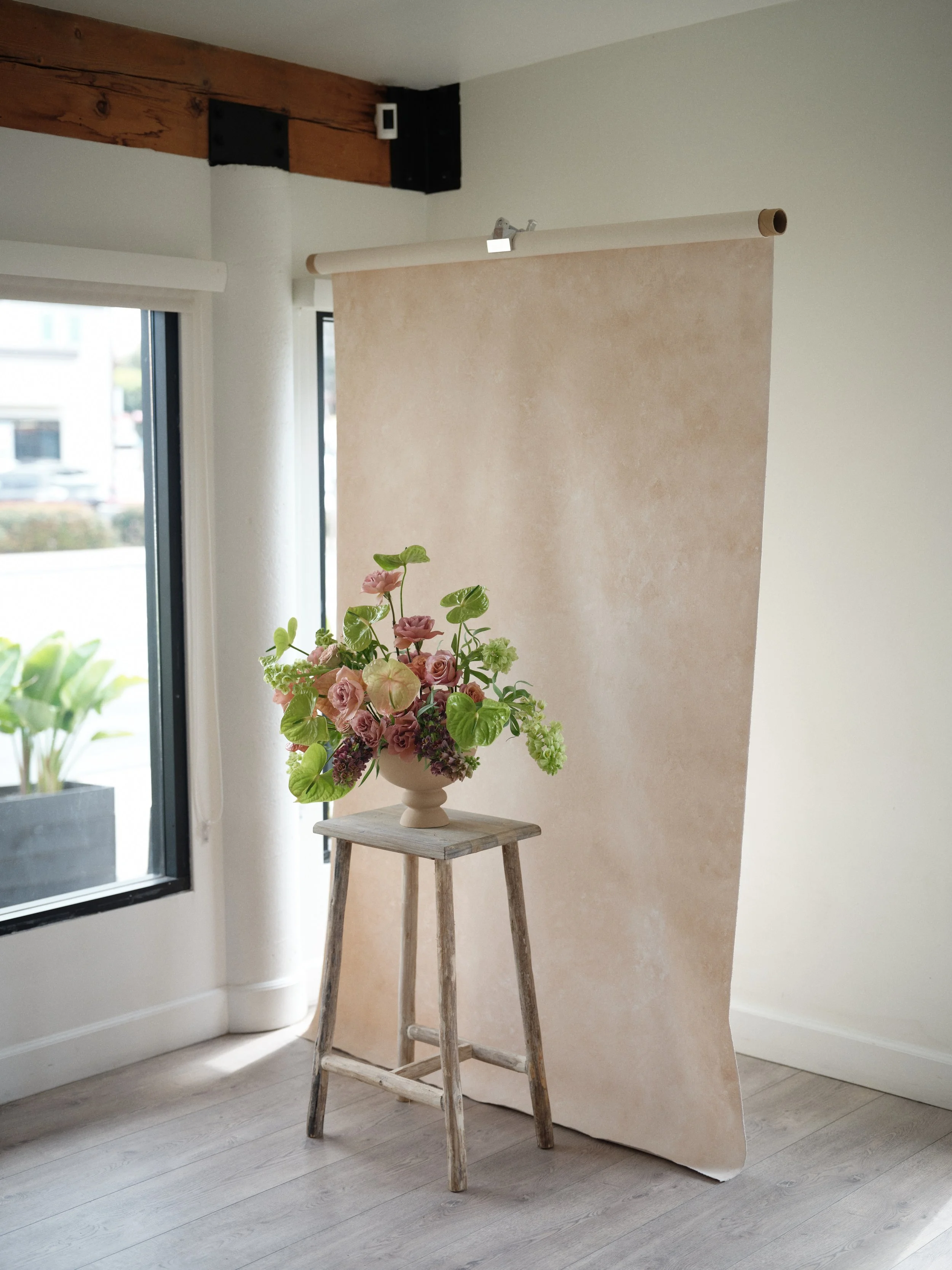
Lighting a hand-painted canvas backdrop is not about adding more light, it is about placing light with intention. Because canvas absorbs and diffuses light differently than paper or vinyl, the angle and quality of your light determine whether texture appears or disappears. Soft, directional natural light, especially at a 45-degree angle, reveals the brushwork, depth, and dimensionality that make these backdrops worth using. When you understand how light interacts with canvas, you stop trying to illuminate a surface and start revealing it, creating images that feel rich, painterly, and impossible to ignore.
Best Camera Settings for Photography Backdrops: Aperture, ISO, and Distance Guide (2026)
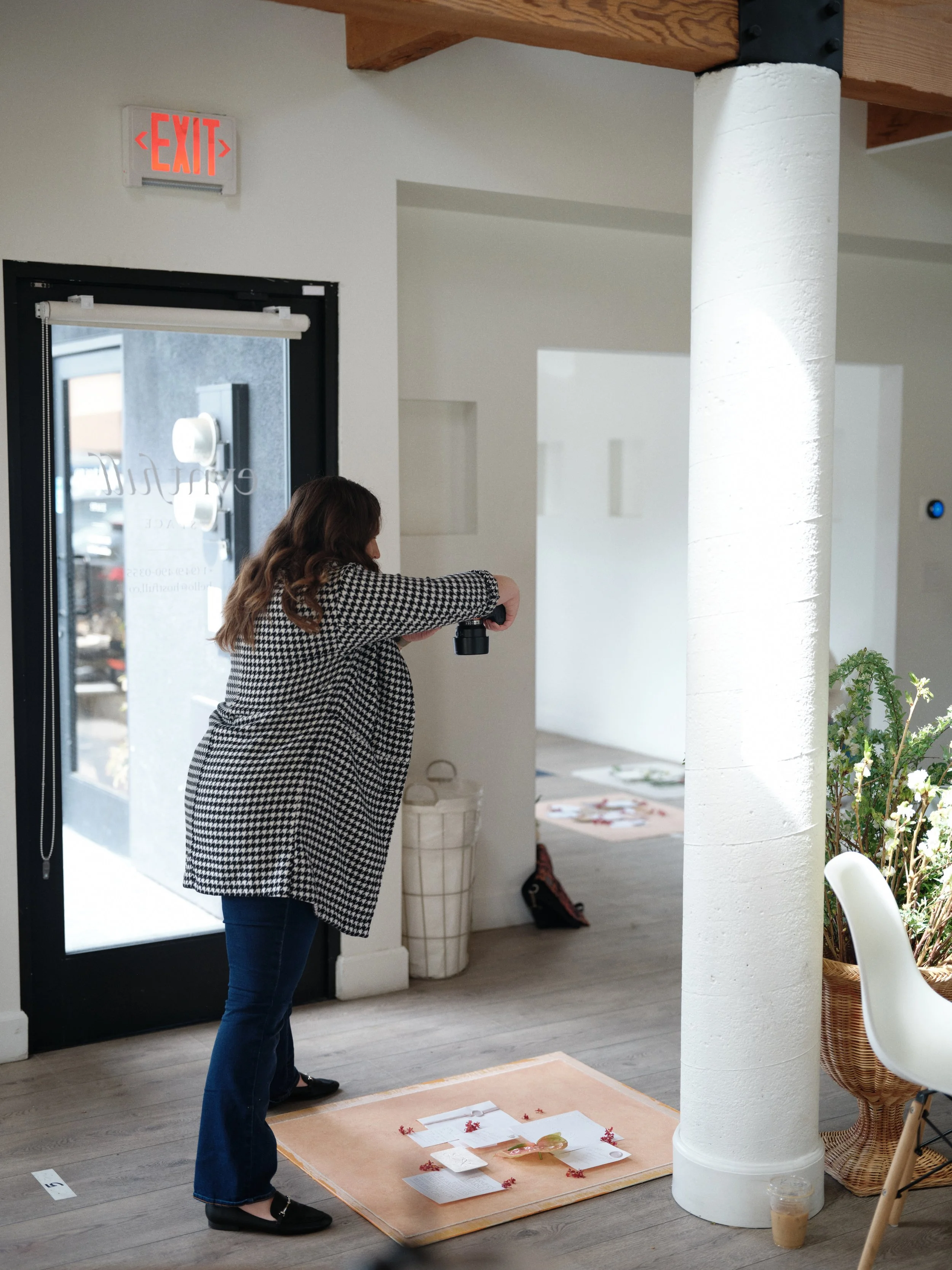
Getting the best results with photography backdrops starts with understanding how camera settings interact with the surface itself. For hand-painted canvas backdrops, the ideal balance typically falls between f/1.8 to f/2.8 for portraits and f/8 to f/11 for product work, paired with ISO 100 to 400 and proper subject distance to control shadows and separation. Unlike vinyl or muslin, canvas responds to light with real texture and dimensionality, meaning your aperture, ISO, and positioning choices directly impact how that texture appears in your final image. When dialed in correctly, your backdrop becomes more than just a background. It becomes a compositional element that enhances depth, color, and overall image quality.
Home Studio Backdrop Solutions: Working with Limited Space and Low Ceilings
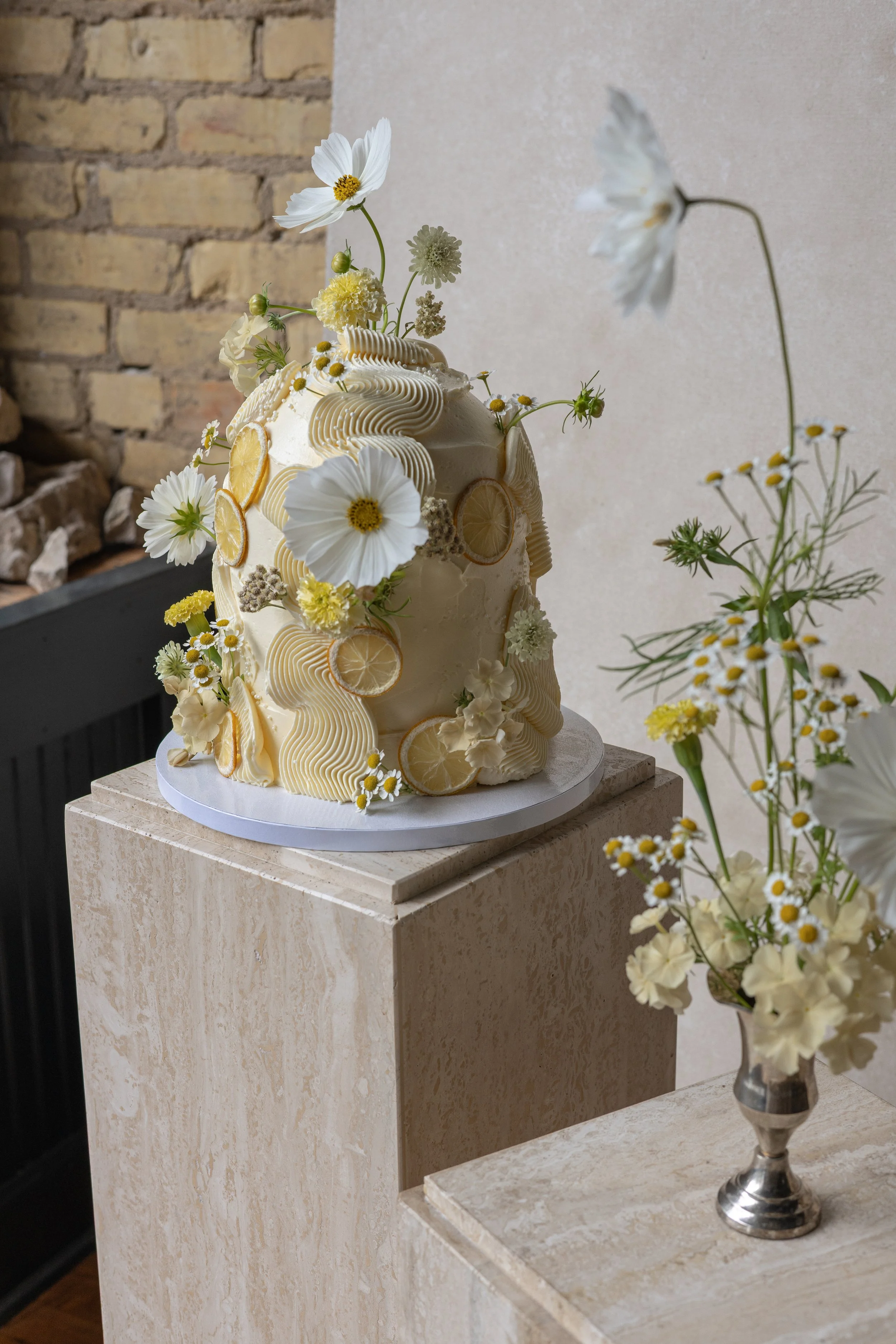
Running a portrait studio from a spare bedroom or small home space is more common than most photographers think and it is absolutely possible to produce professional work without a large commercial studio. This guide breaks down practical home studio backdrop solutions for tight spaces, including how to work with low ceilings, limited floor depth, and multi purpose rooms. From choosing the right backdrop size to optimizing lighting and storage, you will learn simple real world strategies that help small home studios create polished, editorial quality portraits.
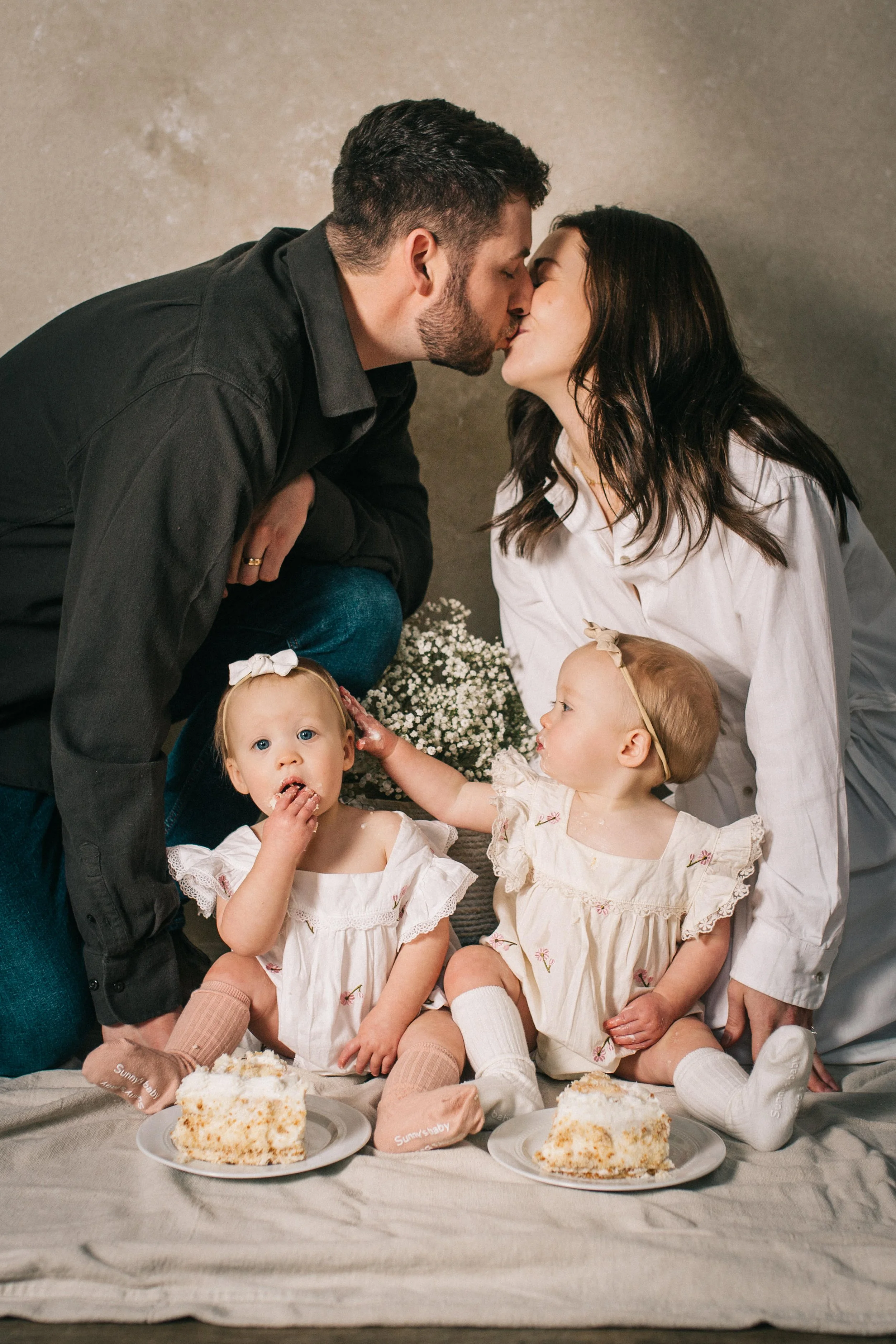
Mini Session Backdrop Strategy: Planning Profitable Seasonal Sessions
Most photographers plan mini sessions around locations, which means dealing with weather, permits, travel, and constantly changing conditions. A smarter approach is building your mini sessions around a strategic backdrop collection instead. When you control the backdrop, you control the entire visual experience. The same three carefully chosen backdrops can power a full year of seasonal mini sessions, from family portraits and couples minis to professional headshots and holiday cards. This guide explains how photographers can use a simple mini session backdrop strategy to plan profitable seasonal sessions, streamline their workflow, and turn a small backdrop collection into a consistent year-round revenue engine.
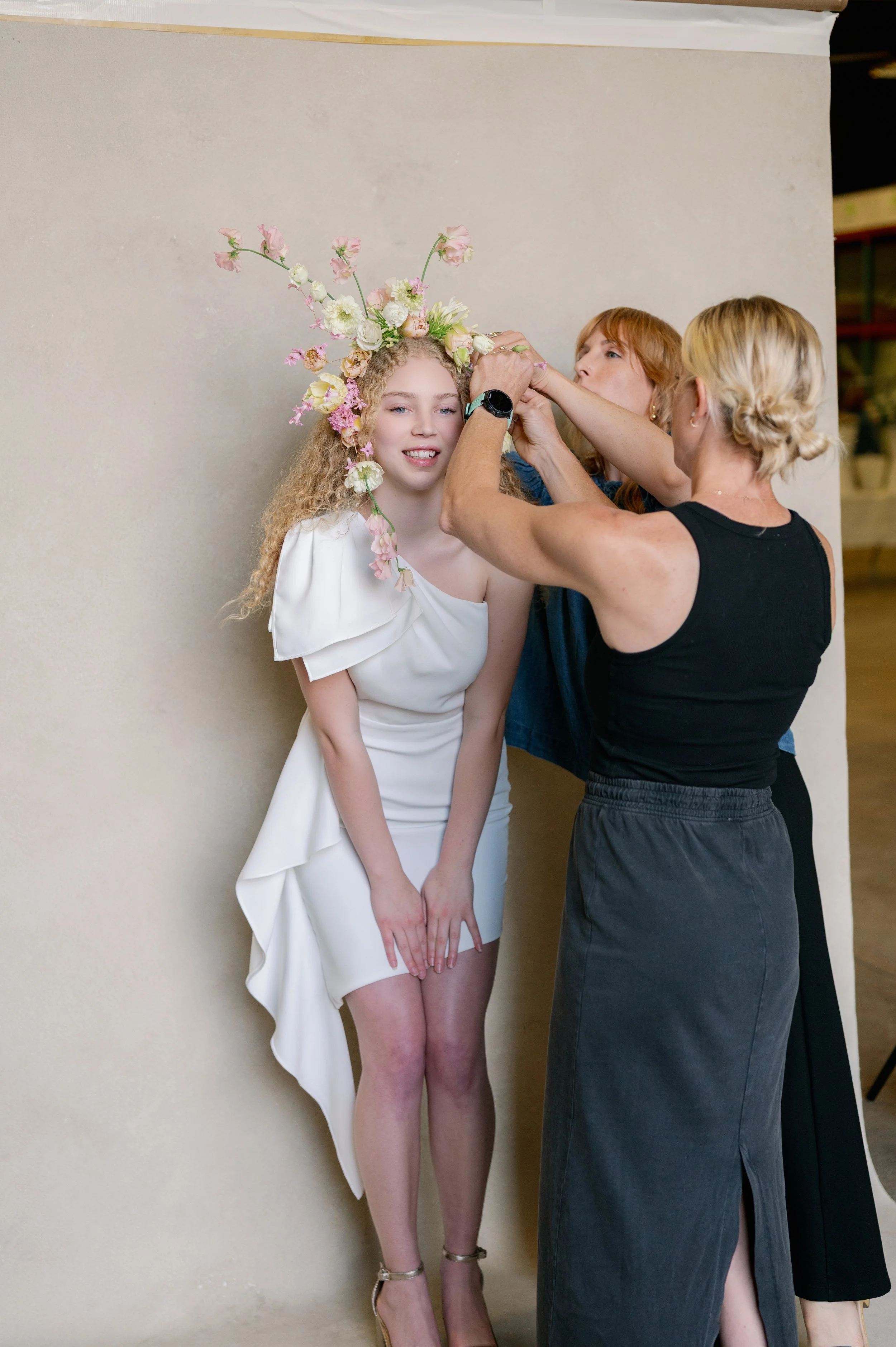
Venue Backdrop Setup: Working in Tight, Unpredictable Spaces
Photographing weddings rarely happens in perfect spaces. More often it happens in cramped hotel rooms, cluttered Airbnbs, or venue prep rooms that were never designed for photography. In this guide, Brandon Kidd shares practical systems for quickly reading any space and creating professional portrait setups in minutes. From the 60-second room assessment to smart backdrop positioning, gear choices, and real-world venue strategies, this field guide shows how photographers can turn unpredictable environments into clean, editorial portrait spaces without slowing down the wedding day.
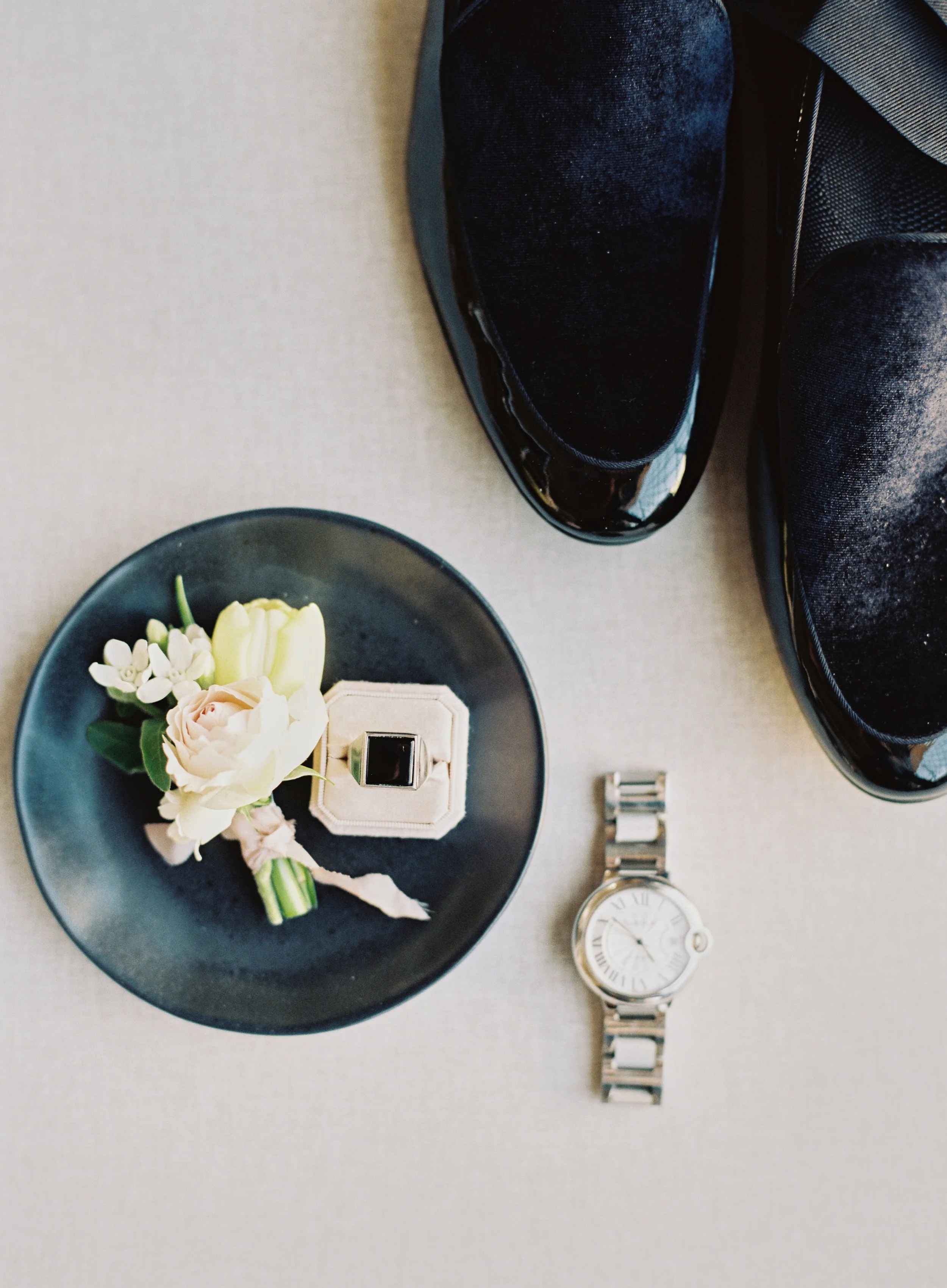
Camera Settings for Backdrop Photography: Aperture, Distance, and Background Blur
Most photographers are taught to shoot portraits wide open for maximum background blur, but that approach often works against you when using a hand-painted backdrop. The texture, brushstrokes, and color variation that make these backdrops special can disappear if your aperture is too wide or your subject stands too far away. In backdrop photography, three variables determine the final look: aperture (f-stop), subject-to-backdrop distance, and focal length. By understanding how these settings interact, photographers can control exactly how much backdrop texture appears in the image, whether they want a soft wash of color, subtle texture, or fully visible brushwork that becomes part of the composition.
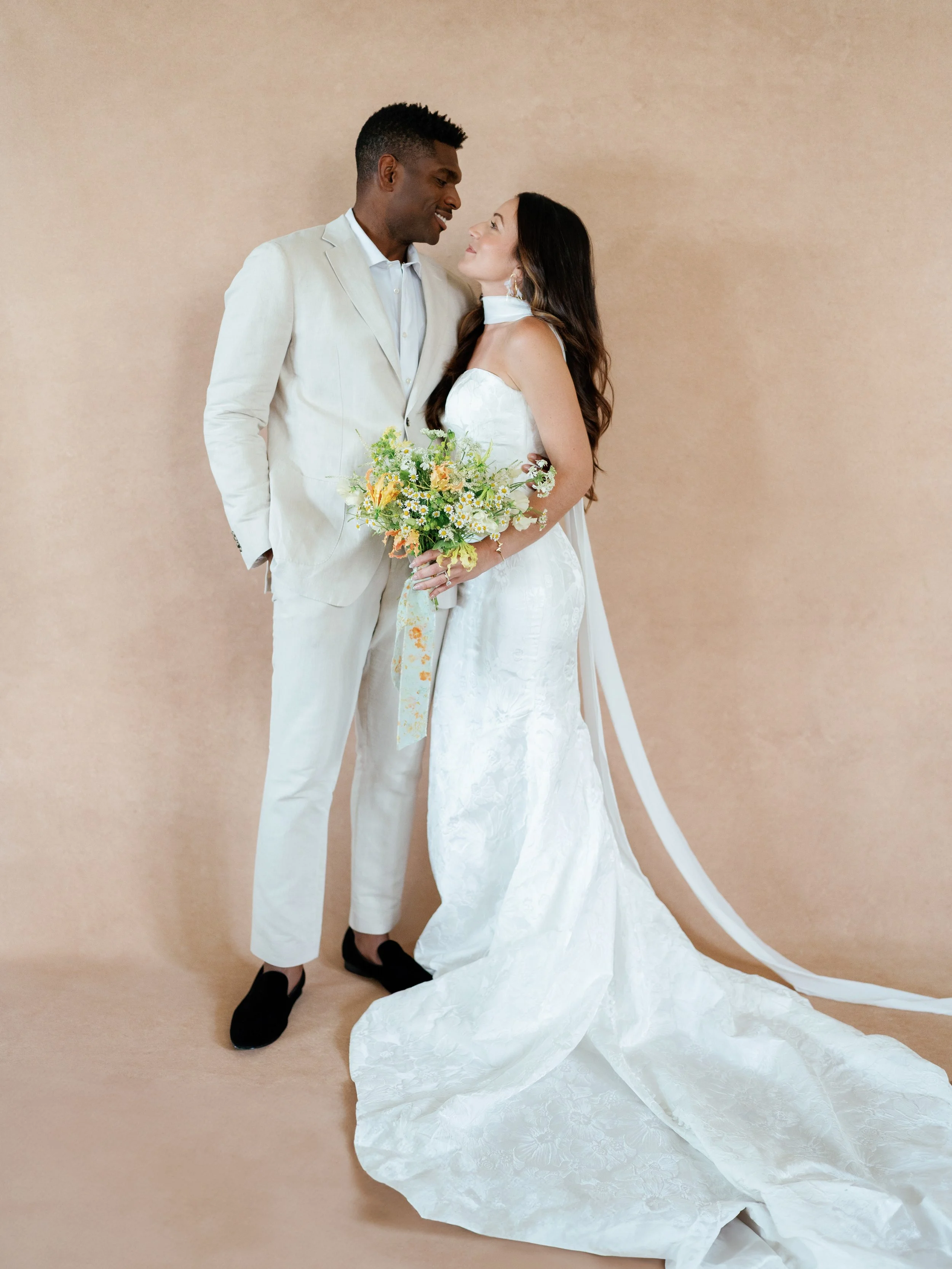
Full-Length Posing on 8x14 Backdrops: Maximizing Your Canvas Coverage
An 8x14 backdrop isn’t just a larger version of an 8x10, it’s a different tool that changes how you approach full-length posing, composition, and camera positioning. With 112 square feet of canvas, the format allows bridal gowns, couples, movement, and groups to exist entirely within the painted surface without worrying about frame edges or venue flooring creeping into the shot. In this guide, we break down how to use the extra height and floor coverage of an 8x14 backdrop to create stronger full-length bridal portraits, dynamic movement shots, and balanced group compositions that maximize every inch of your canvas.